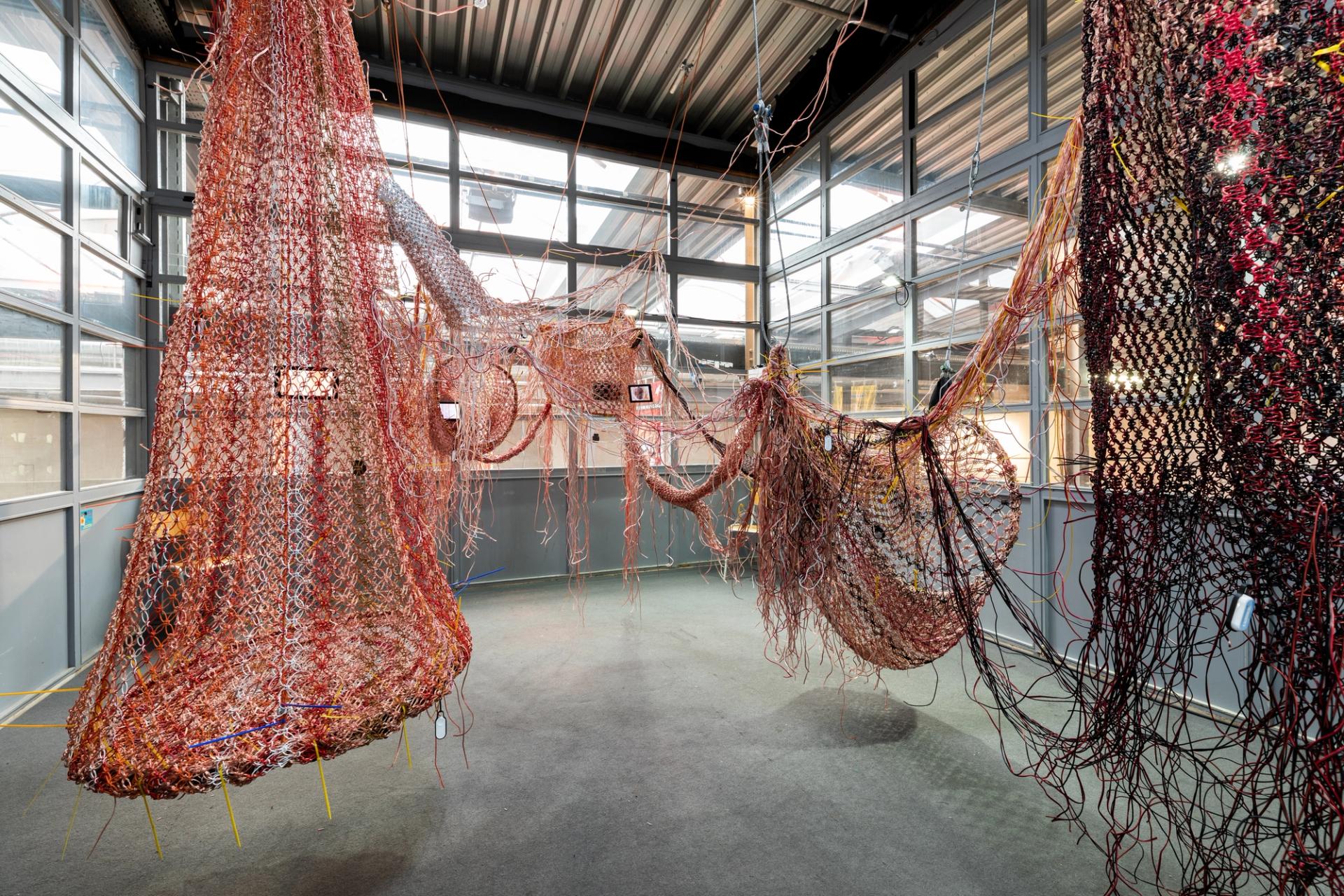
Sacrifice Zone: Burning Coal Mine, Centralia, USA
Scenario: The organisms fear the return of humans and the beginning of another cycle of extraction.
It looks bleak here. We are the thermophiles: Hydrogenobacter thermophilus (heat-loving hydrogen bacteria), Sulfolobus solfataricus (a single-celled archaeon), and Epilobium angustifolium (fireweed). We share this terrain, and are existing where conditions have become too hot, too dry, or too toxic for many other organisms.
In 1962, illegally dumped waste is believed to have ignited in an abandoned open-pit mine beneath the town of Centralia. The fire spread into an extensive network of old anthracite coal seams. Anthracite burns slowly, at extremely high temperatures, and can smoulder underground for decades. Temperatures have reached several hundred degrees Celsius.Ever since, the town has been burning from below. The fire cannot be extinguished. The U.S. government therefore purchased much of the town
and abandoned this partially sterilized terrain.
Meanwhile, we are thriving—each in our own way. We, Hydrogenobacter thermophilus, use hydrogen as an energy source while fixing CO₂. In doing so, we generate biomass on hot mineral surfaces, enable the first stages of microbial colonization, and initiate biogeochemical cycles.
Practicing bioleaching, we, Sulfolobus solfataricus, specialize in mining environments in recovering metals—such as copper—from low-grade ores and mine tailings.
And we, Epilobium angustifolium—better known as fireweed—spread throughout the uninhabitable urban landscape, communicating while nitrogen foam (N₂ foam) still seeps from every crack.
Yet the die-hard humans, with their ornamental rhetoric, insist that everything is not so bad after all. Together we fear that they will reactivate these sacrifice zones, return once again,
and resume extracting what remains.